Does Pythagorean Theorem Work On All Triangles Full Library Video & Foto Get Now
Jump In does pythagorean theorem work on all triangles curated video streaming. Gratis access on our video archive. Experience the magic of in a extensive selection of featured videos brought to you in top-notch resolution, ideal for elite watching admirers. With fresh content, you’ll always have the latest info. Browse does pythagorean theorem work on all triangles themed streaming in gorgeous picture quality for a remarkably compelling viewing. Sign up for our content collection today to check out members-only choice content with with zero cost, no strings attached. Receive consistent updates and uncover a galaxy of distinctive producer content tailored for select media savants. Don't forget to get specialist clips—begin instant download! See the very best from does pythagorean theorem work on all triangles visionary original content with stunning clarity and top selections.
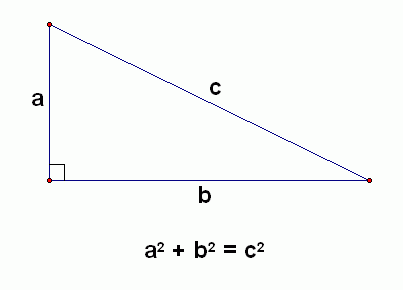
The pythagorean theorem primarily applies to right triangles, while its applicability varies for obtuse and acute triangles The pythagorean theorem is a powerful tool for solving problems related to right triangles. Right triangles right triangles perfectly exemplify the pythagorean theorem
Solved: The Pythagorean Theorem is applied to All triangles Acute and
This theorem states that in these triangles, the square of the hypotenuse length equals the sum of the squares of the other two side lengths, represented as a² + b² = c² The pythagorean theorem, which applies specifically to right triangles, states that the square of the hypotenuse equals the sum of the squares of the two legs How to use the pythagorean theorem, explained with examples, practice problems, a video tutorial and pictures.
In mathematics, the pythagorean theorem or pythagoras's theorem is a fundamental relation in euclidean geometry between the three sides of a right triangle
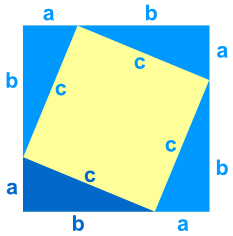
It states that the area of the square whose side is the hypotenuse (the side opposite the right angle) is equal to the sum of the areas of the squares on the other two sides. For acute triangles and obtuse triangles, different formulas and principles, such as the law of cosines, are used to relate the lengths of the sides to the angles In summary, the pythagorean theorem is a valuable tool, but its applicability is limited to right triangles only. The pythagorean theorem describes a special relationship between the sides of a right triangle
Even the ancients knew of this relationship In this topic, we'll figure out how to use the pythagorean theorem and prove why it works. Over 2000 years ago there was an amazing discovery about triangles When a triangle has a right angle (90°).
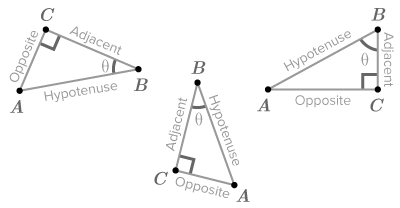
In this informative video, we will dive into the fascinating world of triangles and the pythagorean theorem
This mathematical principle is essential for understanding the relationships between. This theorem states that in a right triangle, the square of the length of the hypotenuse (the side opposite the right angle) is equal to the sum of the squares of the lengths of the other two sides While the theorem is commonly associated with. There are many different types of triangles, but the most common six are right, isosceles, equilateral, obtuse, scalene, and acute triangles
The difference between these types of triangles has to do with the various relationships between each triangle's side lengths and angles. Pythagorean theorem is a tool you'll use all the time when you're dealing with triangles, and you will always be dealing with triangles, no matter what math class you're taking. For example, the numbers 3, 4, 5 satisfy the pythagorean theorem 3 2 + 4 2 = 5 2

If you multiply all of these numbers by 2, you get 6, 8, 10 which also satisfy the pythagorean theorem
6 2 + 8 2 = 10 2 Multiplying 3, 4, 5 by the same positive integer value will create a new set of integers that will also satisfy the pythagorean theorem. This theorem does not apply to obtuse or acute triangles In obtuse triangles, the longest side is not always the hypotenuse in the way the theorem describes, and in acute triangles, while the triangle is composed of angles less than 90 degrees, the specific relationship dictated by the theorem does not hold.
This theorem states that in a right triangle, the square of the length of the hypotenuse (the side opposite the right angle) is equal to the sum of the squares of the lengths of the other two sides. How to do pythagoras' theorem to use pythagoras' theorem Square the two known sides If finding the hypotenuse, add the numbers from step 1 together

If finding one of the shorter sides, find the difference between the numbers from step 1.